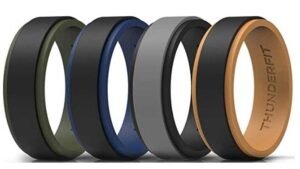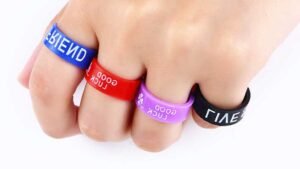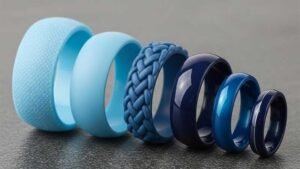
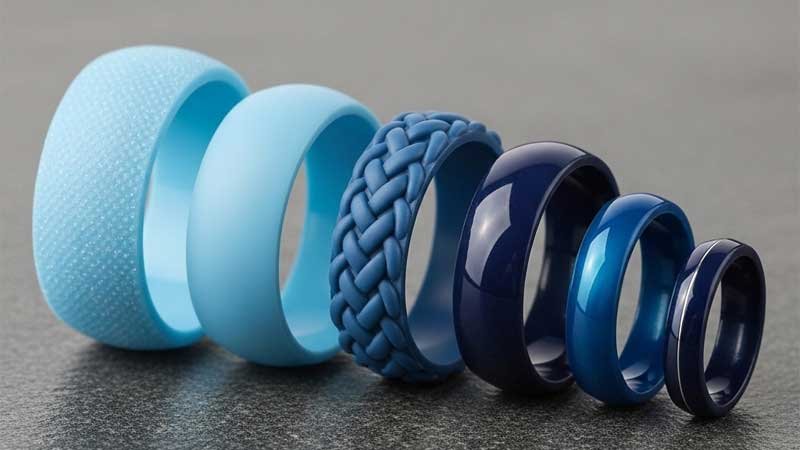
Silicone rings have become a popular choice for sports, weddings, and everyday wear due to their softness, safety, and diverse designs. One key factor when buying a silicone ring is size. If the size is off, it can affect both comfort and the ring’s lifespan.
This guide will help you find the right size by covering material features, measurement methods, and common mistakes.
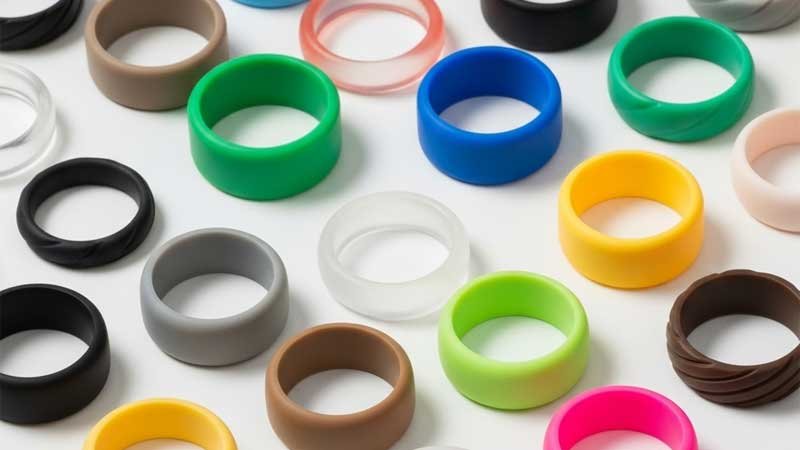
Why Size Matters for Silicone Rings?
Choosing the right size for a silicone ring is all about balance. If the ring is too loose, it may slip off during activities, especially sports or heavy lifting. If it’s too tight, it can restrict blood flow, causing discomfort or even pain, particularly in hot weather or when your fingers swell.
Silicone’s unique properties make sizing slightly different from metal rings. The material is elastic, allowing for a small amount of stretch and a higher tolerance for minor size differences. Its rebound ability means it can return to its original shape after regular wear.
Because of this, you can choose a silicone ring that feels just a bit snugger than a metal ring, but precise measurement is still essential. The goal is to find your golden size. It should be secure enough to stay in place and comfortable enough for all-day wear.
How to Measure Silicone Ring Size Accurately?
Finding the right size is the key to comfortable wear. Silicone is soft and slightly stretchy, so sizing rules are not exactly the same as for metal rings. Here are four common and practical measuring methods, along with professional tips from industry experience.
| Method | Pros | Cons | Best For | Est. Accuracy |
| Paper/String Measurement | Free, simple | Accuracy affected by tightness | Home measuring | 85% |
| Existing Ring Diameter | Fast, precise | Width differences can affect fit | Replacing a ring | 90% |
| Professional Sizer | Very accurate | Requires purchase or store visit | First-time buy | 98% |
| Digital Tool | Convenient, modern | Accuracy depends on device/lighting | Online shopping | 95% |
Method 1: Paper Strip/String Measurement
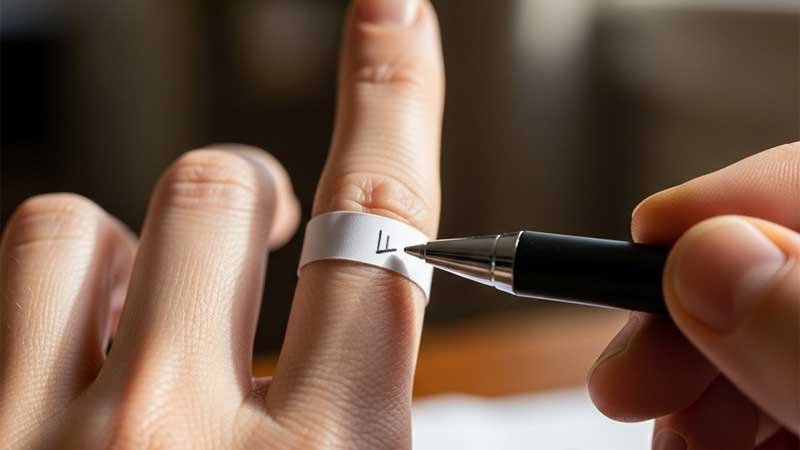
This is the easiest DIY method. All you need is a paper strip (or thin string), a pen, and a ruler.
Steps:
- Cut a strip about 5 mm wide and wrap it around the base of your finger.
- Keep it snug against your skin, but not too tight. Make sure it can pass over your knuckle smoothly.
- Mark the point where the ends meet, then lay the strip flat and measure the length in millimeters.
- Divide the circumference by 3.14 to get the diameter, then check a sizing chart.
Pro tip: For silicone rings, subtract 0.5–1 mm to allow for the material’s compression.
Method 2: Existing Ring Inner Diameter
If you already own a ring that fits well and is similar in style and width to the silicone ring you want, use it for reference.
Steps:
- Use a caliper or precise ruler to measure the inner diameter in millimeters.
- Make sure to measure across the very center of the ring.
- Compare the result with a sizing chart.
Note: Since silicone stretches slightly, if your measurement falls between two sizes, choose the smaller one.
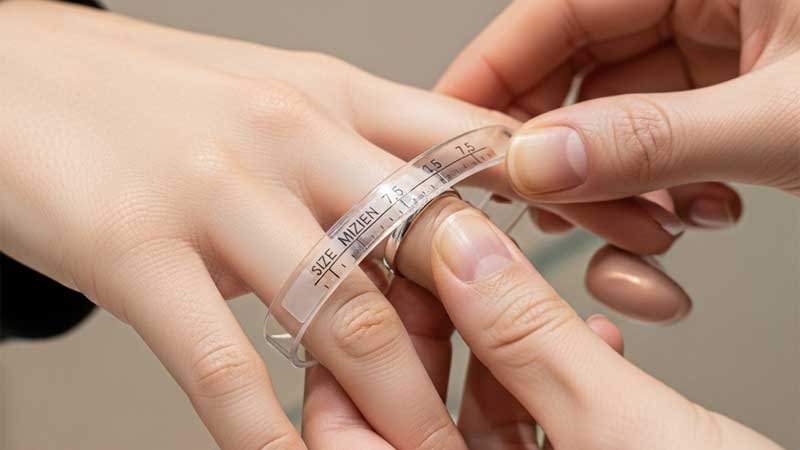
Method 3: Professional Ring Sizer
Some jewelry stores and silicone ring brands offer plastic or metal sizers for in-store fitting.
Steps:
- Try on different sizes one by one.
- Pick the one that slides over your knuckle smoothly, fits securely, and does not pinch.
- Record the size number marked on the sizer.
Advantage: Extremely accurate (±0.1 mm), making it the best choice for first-time buyers.
Method 4: Digital Measuring Tools
Some brands now have mobile apps or online tools. These use photos or AR to measure your finger size.
When using these tools, keep the lighting even and avoid shadows. Make sure to calibrate the measurement with a reference object like a credit card or coin. If possible, cross-check the results with a traditional measuring method for better accuracy.
These tools are convenient and quick, making them ideal for online shopping, but their accuracy can vary depending on your device and lighting conditions.
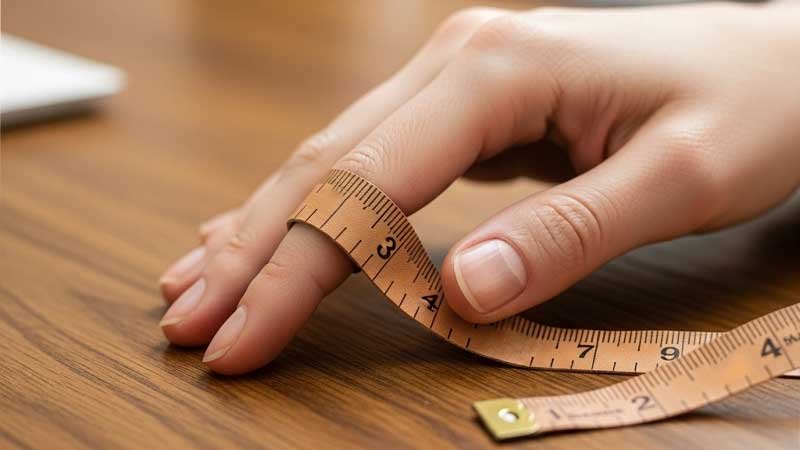
What Factors Affect the Choice of Silicone Ring Size?
Choosing the right silicone ring size is not just about measuring once. Finger size can change because of many inside and outside factors. Knowing these details helps you find a ring that fits well and lasts longer.
Time and Temperature Changes
Finger size varies throughout the day and with the environment. In the morning, especially in cold weather, fingers tend to be slimmer. As the day goes on, blood flow and fluid balance increase, causing fingers to swell slightly in the afternoon or evening. Hot weather also makes fingers a bit larger because higher temperatures boost local blood circulation and moisture buildup.
To get a more accurate ring size, measure your finger in the afternoon or evening when it is more stable. Avoid measuring right after waking up or exercise to reduce errors.
Ring Width and Wearing Comfort
The width of a silicone ring greatly affects how it feels. Wider rings cover more skin and create more friction and pressure on your finger. Even though silicone is soft and stretchy, wide rings still feel tighter than narrow ones.
When buying a wide silicone ring, consider choosing a size half a size larger than usual. This ensures the ring fits securely without feeling too tight.
Knuckle Size and Ring Fit
Besides measuring the base of your finger, the size of your knuckle also matters. Knuckles are usually wider than the finger base. If the ring is too tight, it might not slide over the knuckle, even if it fits well at the base.
When measuring, check both the finger base and knuckle circumference. Pick a size that easily passes over the knuckle but isn’t loose at the base. This balance helps the ring fit smoothly and comfortably, avoiding any hassle during daily wear.
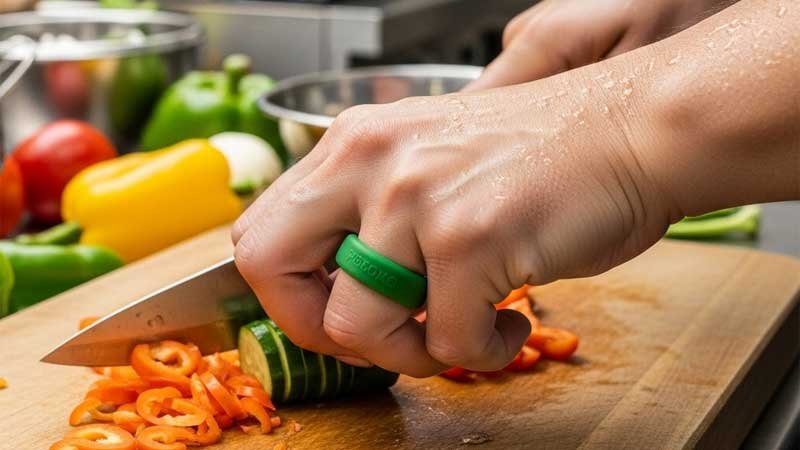
What Are Common Mistakes When Choosing Silicone Ring Sizes?
Many people make some typical mistakes when picking a silicone ring size. Knowing these pitfalls and how to avoid them is important. Here are common errors, their effects, and practical solutions to help you choose confidently and accurately.
| Common Mistake | Result | How to Fix It |
| Ignoring ring width | Ring feels too tight or loose | Check the ring’s width before buying |
| Measuring after heat or exercise | Size appears larger than usual | Measure when your fingers are relaxed |
| Using the wrong size chart | Size does not match expectations | Confirm the brand’s sizing system |
| Using metal ring size as reference | Poor fit due to material differences | Adjust size based on silicone’s stretch and softness |
What Is the Ultimate Checklist Before Buying a Silicone Ring?
Before you buy a silicone ring, thorough preparation is very important.
First, measure your finger size using at least two different methods to improve accuracy and reliability. Next, take measurements multiple times at different times of the day, especially in the afternoon or evening when your fingers are more stable. Use the average of these measurements as your final reference. Then, always check the specific size chart of the brand you choose, since sizing standards can vary between brands. Finally, consider the wearing scenario when selecting your size. For sports, a more secure fit is needed. For weddings, comfort and appearance may matter more. For daily wear, balance durability and comfort.
Following this ultimate checklist will help you reduce sizing mistakes and find the silicone ring that fits you best.
Conclusion
The right size matters not only for wearing comfort but also for how long your silicone ring lasts. By measuring carefully, avoiding common sizing errors, and referring to brand size charts, you can easily find the perfect silicone ring for you.
Ready to create your own unique silicone ring? Contact us today to start your custom design journey. Let’s bring your ideas to life with expert craftsmanship and high-quality materials. Your perfect silicone ring awaits!