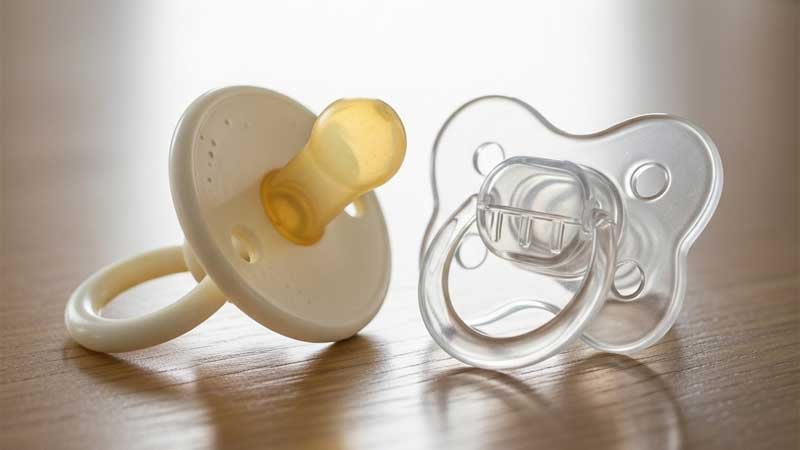
When choosing a pacifier, many parents wonder: which is better, natural rubber latex or silicone?
The material affects not only the sucking experience but also safety, ease of cleaning, and durability. This article gives a clear comparison of both materials to help parents make an informed decision.
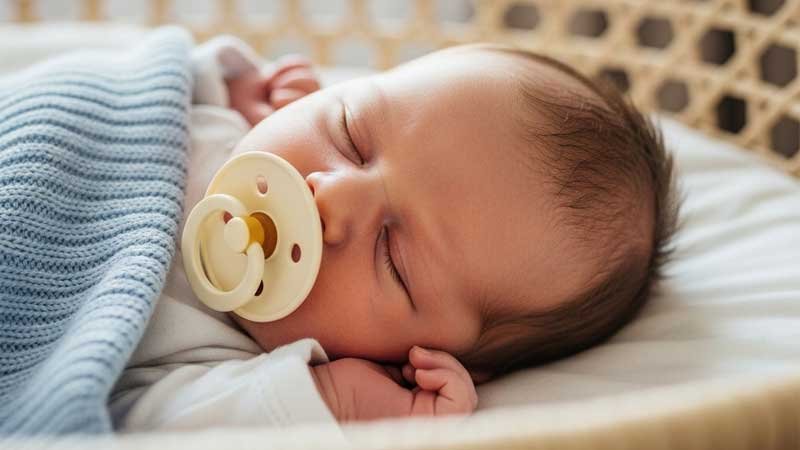
What’s the Difference Between Natural Rubber Latex and Silicone?
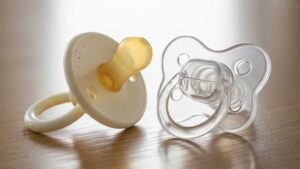
Natural Rubber Latex comes from the sap of rubber trees. It is a truly natural material with renewable and eco-friendly qualities. Its soft and elastic texture closely mimics breast milk, giving newborns a more natural sucking experience. However, the natural proteins in latex can trigger allergic reactions. Latex also ages faster and is more sensitive to temperature and humidity changes.
Silicone is derived from silica (quartz sand) and chemically synthesized into a stable polymer. Its main advantages are high stability and low allergenicity. Silicone rarely reacts with body fluids or food. It can withstand repeated boiling, steaming, or UV sterilization without deformation or degradation.
What Are the Differences in Properties Between Pacifiers?
In daily use, parents often focus on durability, safety, and comfort. The physical and chemical properties of different materials vary, directly affecting a baby’s sucking experience and how easy it is for parents to clean and maintain the pacifier.
Elasticity and Softness
Latex feels very soft and highly elastic, closely mimicking the texture of breast milk. It is especially suitable for newborns, making it easier for them to accept.
Silicone is slightly firmer but more resilient. It resists biting and deformation, making it ideal for teething babies while keeping its shape stable and ensuring safe sucking.
Heat Resistance
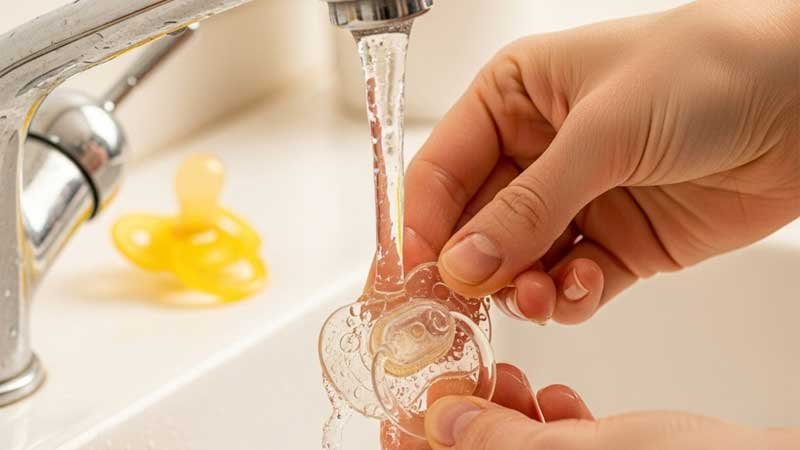
Latex can age, become sticky, or even crack under high temperatures. Frequent boiling or steam sterilization shortens its lifespan noticeably.
Silicone withstands high heat and steam without structural damage or releasing harmful substances. Parents can use it long-term and sterilize it frequently without worry.
Transparency and Cleanliness Visibility
Latex usually appears milky yellow with low transparency, making it harder for parents to see if it is fully clean.
Silicone can be highly transparent or semi-transparent, allowing a clear view of cleanliness. This helps maintain hygiene and reduces the risk of bacterial growth.
Durability
Latex is sensitive to temperature, humidity, and light, so it ages faster and needs regular replacement.
Silicone resists aging and UV exposure, offering a longer usage cycle. It is economical and easier to maintain, especially for families using pacifiers frequently.
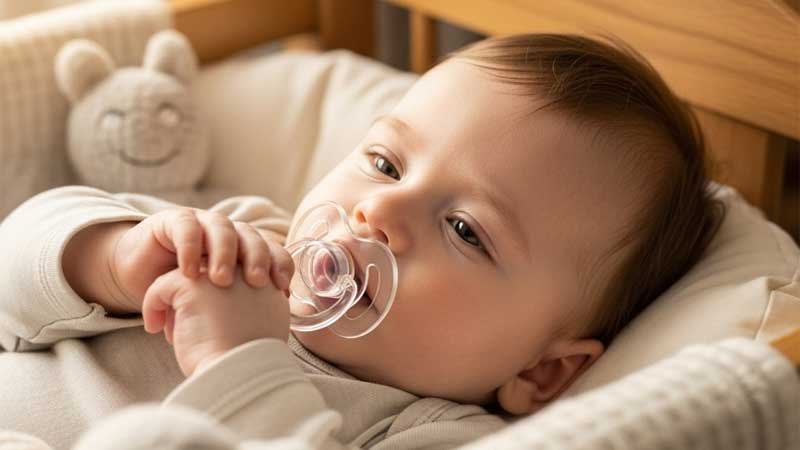
What Should Parents Consider When Choosing a Pacifier?
Choosing a pacifier is not just about selecting a material. Parents also need to consider the baby’s age, health condition, and household sterilization habits. The table below summarizes recommended materials for different scenarios, helping parents quickly determine which pacifier suits their baby best.
| Scenario | Recommended Material | Reason |
| Newborn | Latex | High softness, closely mimics breast milk, easier for baby to accept |
| Teething Stage | Silicone | Strong and resilient, unlikely to break, ensures safe sucking |
| Frequent Sterilization | Silicone | Heat-resistant, durable, suitable for frequent sterilization |
| Allergy Risk | Silicone | Low allergenicity, safer for sensitive babies |
Conclusion
In general, silicone pacifiers are a better choice for most families who want something durable, safe, and easy to maintain. For those who prefer a natural feel, latex pacifiers remain a reasonable option.
If you are looking for custom silicone products, we are here to help. From baby care items to other silicone solutions, our team can design and produce products that fit your needs. Feel free to contact us and explore how we can create safe and reliable silicone products together.